
Last updated November 14, 2026
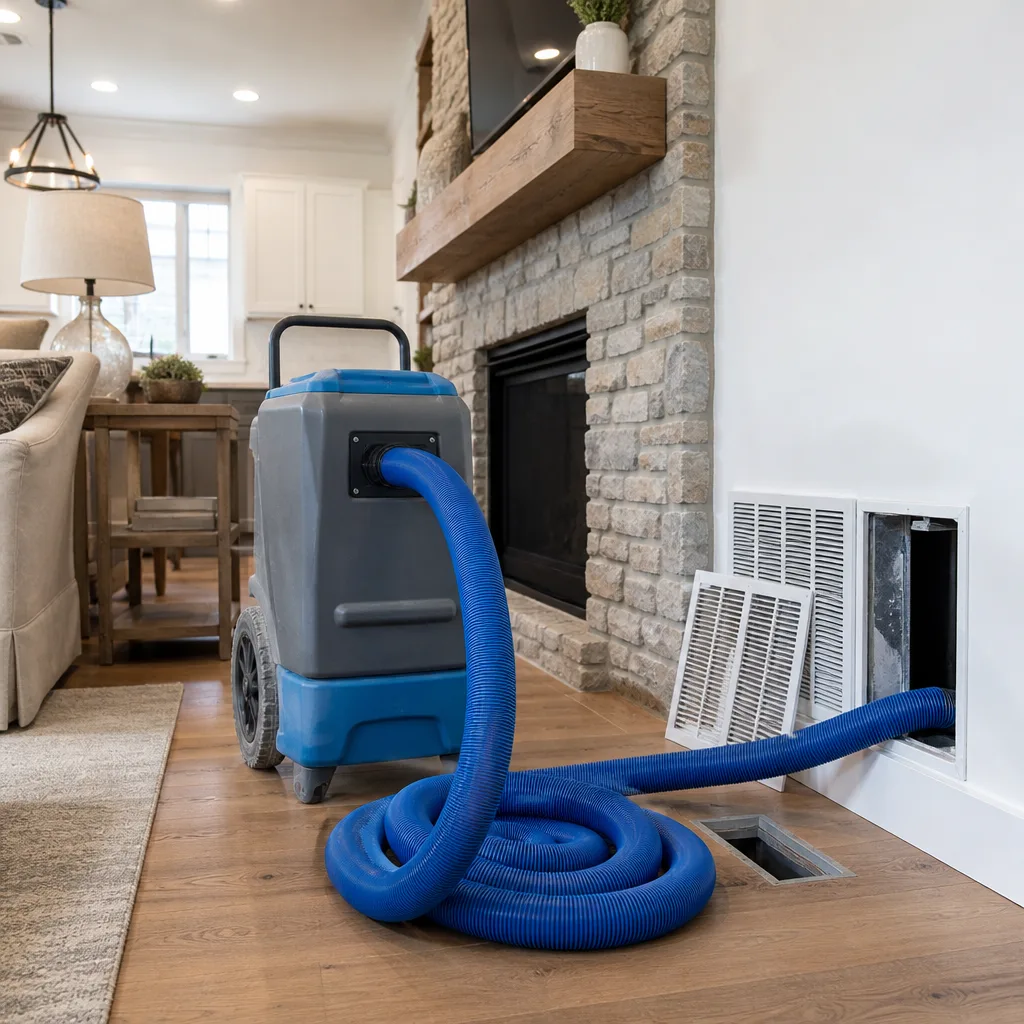 Whole-home duct cleaning
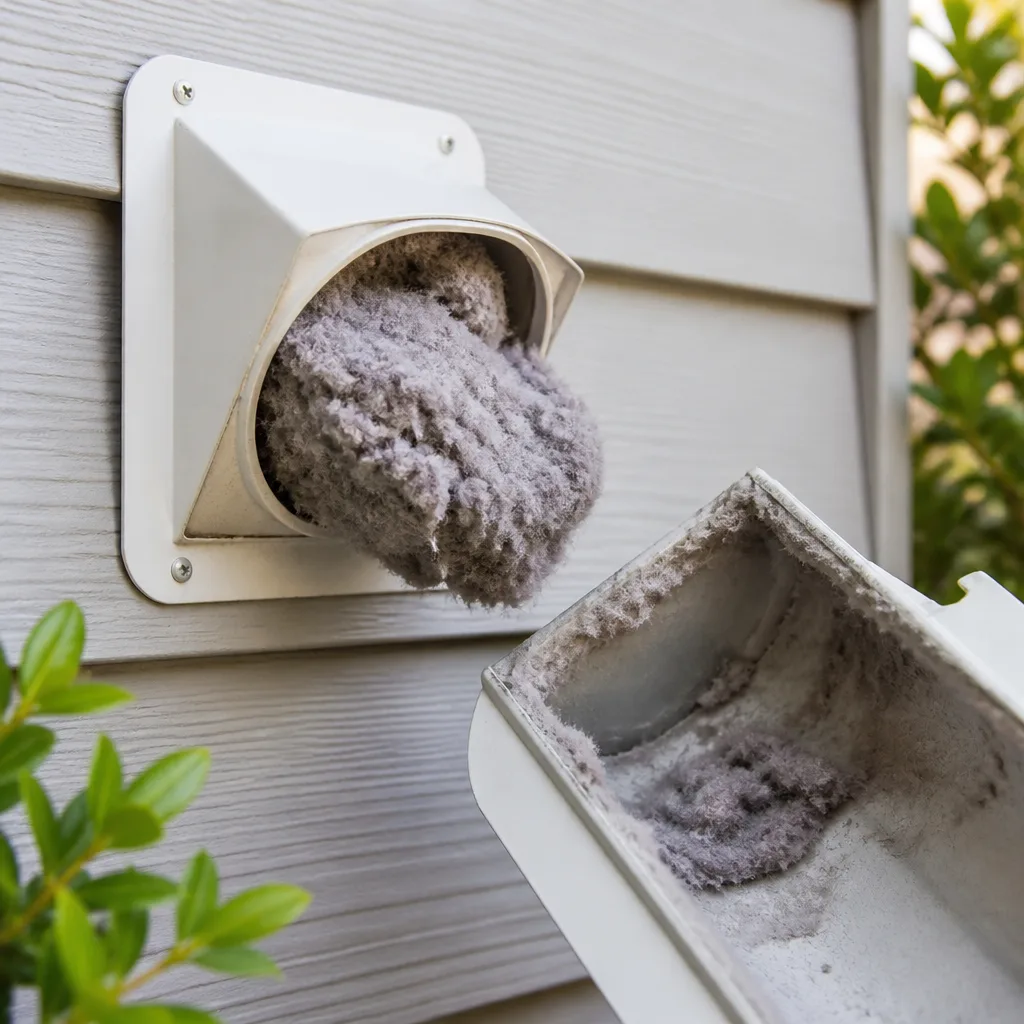 Dryer vent cleaning
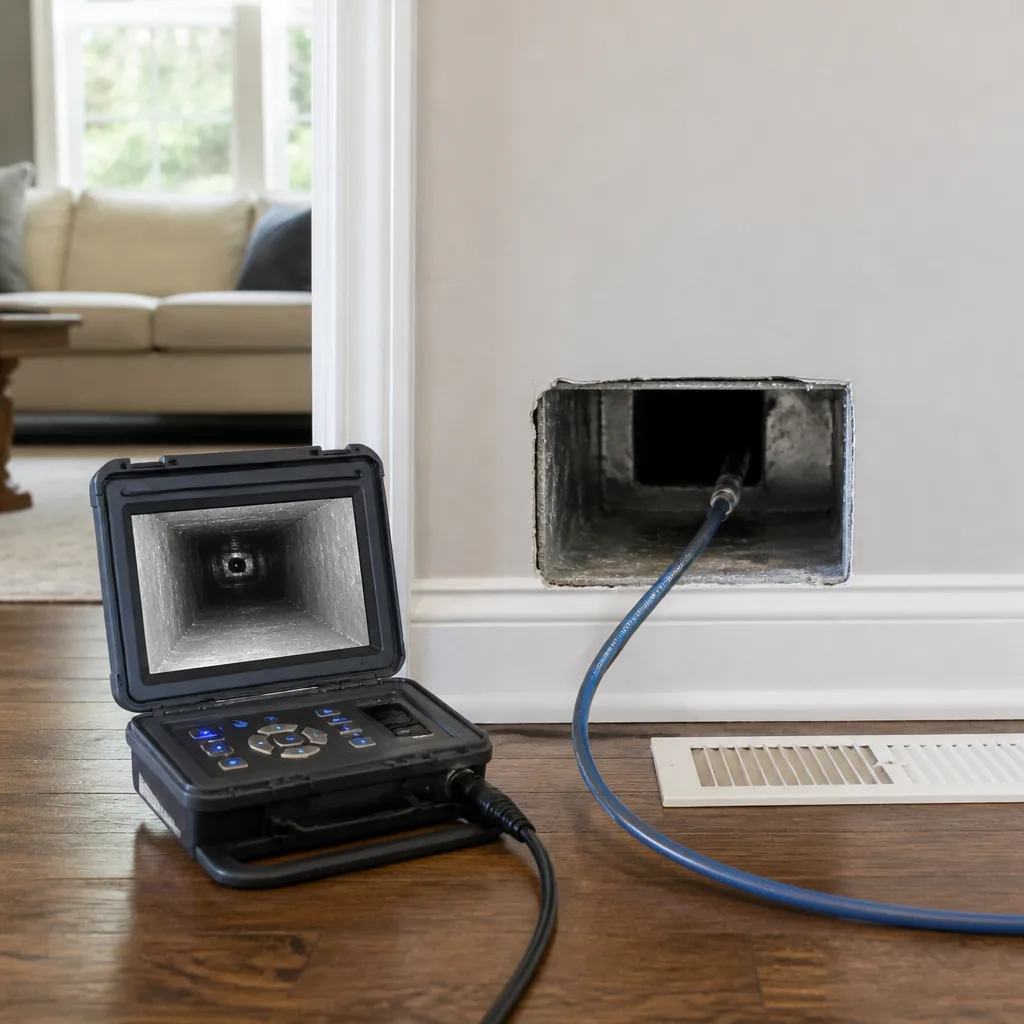 Camera inspection
 Sanitizing & deodorizing
Whole-system duct and dryer vent check with before-and-after photos - you see exactly what came out of your vents
That "$99 whole-house special" is a bait ad - the real number appears once they are in your hallway, or the "clean" is a shop-vac at the register. We photograph the inside of your ducts before and after instead.
Seasonal Air Duct Cleaning Care for Spokane: Year-Round Homeowner’s Guide
Most homeowners treat duct cleaning as a once-a-year checkbox, usually scheduled by memory or by whatever coupon shows up in the mail. In Spokane that approach misses the real problem. The air moving through your ductwork changes character four times a year here, and each season leaves a different kind of debris behind: summer wildfire particulate, fall harvest dust, winter combustion residue, spring pollen. Cleaning once ignores three-quarters of that cycle. This guide walks through Spokane’s air quality calendar month by month, shows where duct systems take on the most stress, and identifies the two windows in the year when professional cleaning does the most good. You’ll also find seasonal filter strategy, a post-smoke protocol, and the reason fall matters for your dryer vent.
Quick Answer
Seasonal duct care in Spokane means cleaning twice rather than once: a late-spring cleaning after pollen season to clear return-air buildup, and an early-fall cleaning before the heating season begins and before wildfire smoke has a chance to settle into duct lining. Between those two professional visits, filter changes timed to the smoke, harvest, and pollen cycles keep the system manageable. The dryer vent belongs on the fall list too, because the heaviest dryer use and highest fire risk fall in the same months.
Your ductwork doesn’t fail all at once. It accumulates, season by season, and the composition of that accumulation is what makes Spokane different from a mild coastal climate where a single annual cleaning might genuinely be enough.
Styles & brands we work with
- Whole-home duct cleaning
- Dryer vent cleaning
- Camera inspection
- Sanitizing & deodorizing
Table of Contents
- Spokane’s Air Quality Calendar: Month by Month
- The Two Best Windows for Professional Duct Cleaning
- Post-Wildfire Smoke Protocol
- Winter Heating Season: What Early Furnace Startup Reveals
- Spring Pollen, Wind, and the Return Air Problem
- A Seasonal Filter Strategy for Spokane Homes
- Dryer Vent Cleaning: Why Fall Belongs on the Calendar
- Cleaning vs. Repair: When the Ductwork Itself Is the Problem
Spokane’s Air Quality Calendar: Month by Month
Spokane’s air quality index can swing from some of the worst readings in the nation during an August wildfire smoke event to some of the cleanest air in the country by early June. That swing is not a footnote. It’s the central fact that should drive how you schedule duct maintenance. Here’s how the year breaks down for a forced-air home in Spokane.
- January through March: Heating season at full load. Natural gas and electric forced-air systems run continuously, moving warmed air through every duct run in the house. Combustion byproducts from gas furnaces and fine dust from the airstream accumulate on duct walls. Outdoor air is cold and relatively clean, but indoor particulate builds.
- April through early June: Pollen season paired with Spokane’s wind-heavy spring. Pine, grass, and deciduous pollen infiltrate through return-air grilles and any duct leakage in attics or crawlspaces. This is the cleanest outdoor air of the year, which makes it the best window to reset the system before summer.
- July: Heat and dust. Outdoor particulate rises as vegetation dries. Systems run on cooling mode, and return air pulls in fine dust from open windows and doors.
- August through early September: Wildfire smoke season. When smoke settles over the Spokane area for days or weeks, fine particulate (the PM2.5 fraction) enters homes through every gap and gets pulled into return ducts. This is the most demanding stretch for duct systems.
- September through October: Harvest season. Agricultural dust from surrounding farmland, combined with dry leaves and yard debris, moves through the air. Fall winds carry it into return-air pathways.
- November through December: Heating season returns. Furnaces fire up, and whatever accumulated over the summer and fall gets pushed through the airstream. Dryer use climbs as well.
Two stress peaks, two clean seasons. Most homeowners in Spokane are cleaning during the wrong window and living with the consequences for months.
The Two Best Windows for Professional Duct Cleaning
If you only schedule two professional cleanings a year, late spring and early fall are the windows that do the most work. Here’s why each matters and what a professional cleaning at that moment actually clears out.
Window One: Late May to Mid-June
By the time pollen season closes, return-air ducts hold a season’s worth of pollen, wind-blown soil, and spring dust. Outdoor air is at its cleanest right now, which makes this the best time to reset the system before summer heat and smoke arrive.
- Clear the pollen load. Return ducts and the air handler upstream of the filter carry the highest concentration. Professional cleaning with a Rotobrush or Nikro system reaches the full run, not just what a shop vacuum can touch from the register.
- Inspect for duct damage. Spring wind and temperature swings can open seams in flex duct, especially in attics and crawlspaces. Cleaning is the moment to catch it.
- Verify filter strategy for summer. Confirm you’re running a filter rating that will handle smoke season before it starts, not after.
- Photograph before-and-after. A professional cleaning should include before-and-after photos of your own ducts. If a company doesn’t offer them, ask why.
Window Two: Late September to Mid-October
This window sits between harvest dust season and the return of heating season. Clean now and the first heating cycle pushes clean air through clean ducts, not last year’s residue.
- Clears harvest and late-summer dust before the furnace fires up.
- Removes any wildfire particulate that settled during a smoke event (or confirms it’s gone).
- Pairs naturally with dryer vent cleaning before heavy winter laundry use.
- Sets the system up for the highest-load months of the year.
If you can only do one, choose fall. Winter duct load is the heaviest, and starting it clean is the most useful thing you can do for the indoor airstream in Spokane.
Post-Wildfire Smoke Protocol
After a prolonged wildfire smoke event, don’t wait for the next scheduled cleaning. Fine particulate from smoke does not all stay airborne once the air clears. Some of it settles on duct walls and, in unlined or lightly-lined metal duct, can lodge into the surface enough that normal airflow won’t move it back out. The longer it sits, the harder it is to clear.
What to do, in order:
- Keep the system fan running on low during the smoke event with a high-efficiency filter in place, if your system supports one. Circulating air through a good filter is better than letting particulate settle in every room.
- Seal windows and doors as best you can for the duration. Smoke infiltration while the system runs puts more particulate into the return-air path.
- Change the filter as soon as the smoke clears. A filter loaded with smoke particulate restricts airflow and can push particulate into the duct further downstream.
- Schedule a professional cleaning within a few weeks of the smoke ending. This is not a filter-only event. A proper cleaning reaches the duct surface where particulate has settled.
- Ask about containment. For heavily impacted homes, Abatement Technologies equipment supports negative-pressure containment so cleaning does not blow settled particulate into the living space.
What not to do: don’t run a consumer vacuum into a register and think you’ve handled it. Consumer vacuums stir up fine particulate and can redistribute it throughout the house. The particulate that matters most is too fine to be caught by anything short of professional filtration.
Winter Heating Season: What Early Furnace Startup Reveals
The first cold snap is the diagnostic moment for a forced-air system. When a furnace fires up after months of sitting idle, whatever has accumulated in the ductwork over the summer and fall gets pushed through the house for the first time. That first week tells you a lot about the condition of the system.
- Burning or dusty smell for more than a day or two: The residue on the heat exchanger and in the immediate ductwork is clearing, which is normal for a day. A smell that persists signals more to clear, and often points to accumulation in the duct run.
- Noticeable dust on horizontal surfaces: A normal amount is expected in the first day or two. A persistent layer points to duct leakage, poor filter strategy, or accumulation that needs professional cleaning.
- Reduced airflow from some registers: Often a sign of flex duct that has collapsed, kinked, or come loose. This is a duct repair issue, not a cleaning issue, and it’s worth getting diagnosed rather than ignored.
- Higher static pressure or a furnace that short-cycles: A restricted return path can drive this. Cleaning and inspecting return trunk lines often resolves it, but only after a professional assessment.
Gas and electric systems load the ductwork differently. Gas forced-air systems introduce combustion byproducts into the airstream when venting isn’t fully sealed, and those byproducts settle onto duct walls as a fine residue. Electric forced-air and heat pump systems don’t introduce combustion byproducts, but they run longer cycles and pull more total air through the ductwork, so dust concentration is the dominant issue. Either way, cleaning before the season starts is cheaper than cleaning in the middle of a dust complaint.
If your system has an Aprilaire or Honeywell humidifier or air cleaner inline, winter is also when those components need attention. Professional cleaning of the ductwork pairs naturally with checking that inline filtration and humidification still work as intended – the duct run and the air quality components aren’t separate systems.
Spring Pollen, Wind, and the Return Air Problem
Spokane’s spring is windy. That’s not a throwaway observation. Wind-driven pollen and fine soil move through the outdoor air with force, and every gap in a duct system, every leaky attic penetration, every poorly sealed return-air grille becomes an intake. Return ducts run under more negative pressure than supply ducts, so they pull air (and whatever is in it) into the system from the surrounding space.
That’s why spring hits the return side hardest. The return trunk is the duct run that sees the highest concentration of pollen, dust, and outdoor particulate when the season runs its course.
What makes spring cleaning worthwhile in Spokane specifically:
- Pine and grass pollen are the dominant allergens this time of year. They’re coarse enough to be trapped by a filter, but only if the filter is loaded with them. Once it’s saturated, they move on to the duct walls.
- Wind-driven fine soil is small enough to pass through coarse filters. It settles on horizontal duct runs in attics and crawlspaces where airflow is slowest.
- Windows open in spring allow pollen and dust to circulate directly, adding to what the return pulls in.
What to do: run a filter change at the start of pollen season and again at the end. Cleaning after the pollen season (late May to mid-June) clears what the filters didn’t catch. Waiting until fall means the homeowners breathe a summer of accumulated pollen and then add wildfire particulate on top of it.
A Seasonal Filter Strategy for Spokane Homes
Filter strategy is the piece most homeowners skip. The right filter in the wrong season wastes money. The wrong filter in the right season leaves particulate in the ductwork. Here’s how we think about it year-round in Spokane.
- Confirm your system’s filter rating ceiling first. Not every furnace or air handler can move air through a high-MERV filter without restriction. Ask a technician what rating the system is rated for before you buy filters.
- Spring through early summer: mid-grade filter, changed every 30 to 60 days. Pollen is coarse and captures well. A moderate filter plus frequent changes does more than a heavier filter left too long.
- Late July through September: high-efficiency filter, changed as soon as the smoke clears or when the filter visibly loads up. Wildfire particulate is fine and requires a higher-efficiency media. But smoke season is also when filter loading is fastest, so check frequently.
- Fall: mid-grade filter, changed at the start of heating season. This is the reset point. Change the filter before the furnace runs continuously, not after.
- Winter: whatever the system supports, changed monthly if you’re running a high-MERV filter in a gas forced-air system. Restricted airflow in a heating system causes more problems than most homeowners expect.
If your home has inline Aprilaire or Honeywell air cleaning, the filter strategy needs to match that system’s design, not replace it. A whole-home air cleaner changes how the filter change interval works and what kind of filter media is compatible.
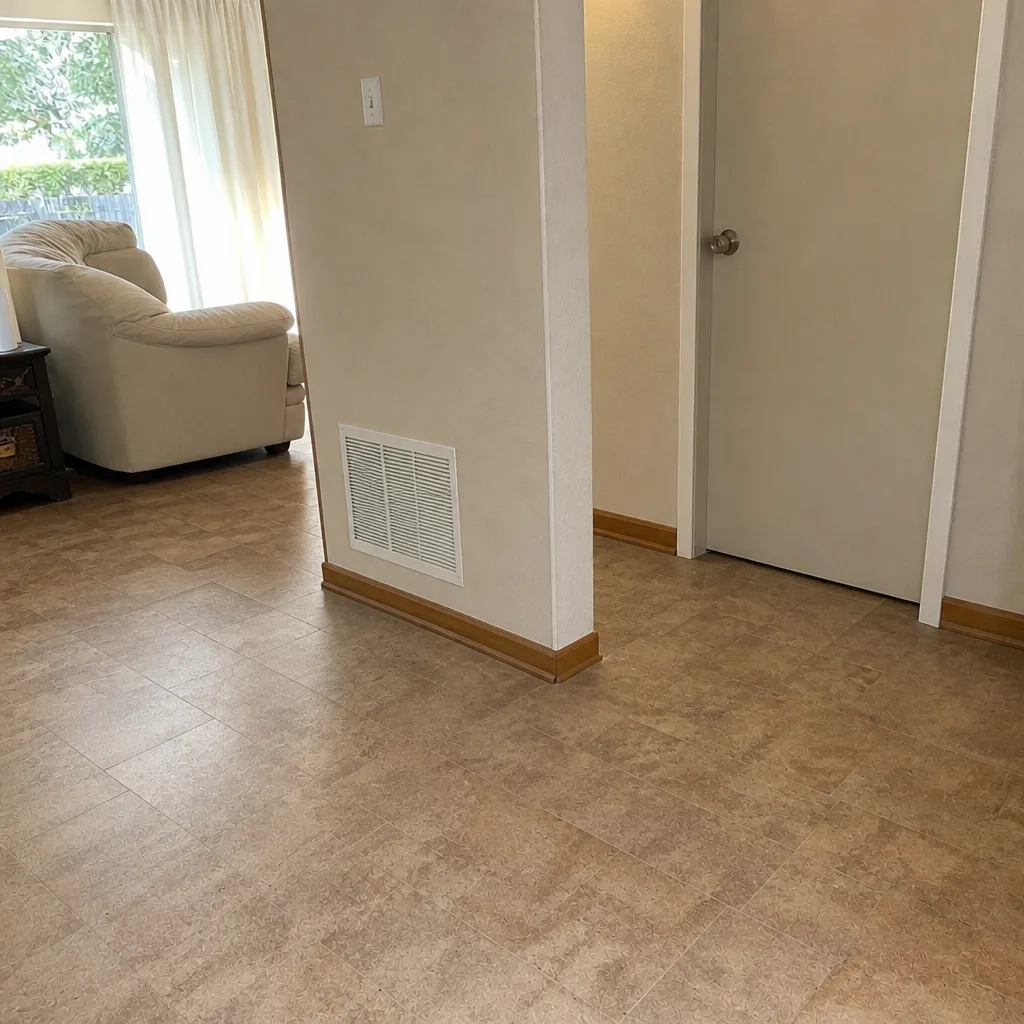
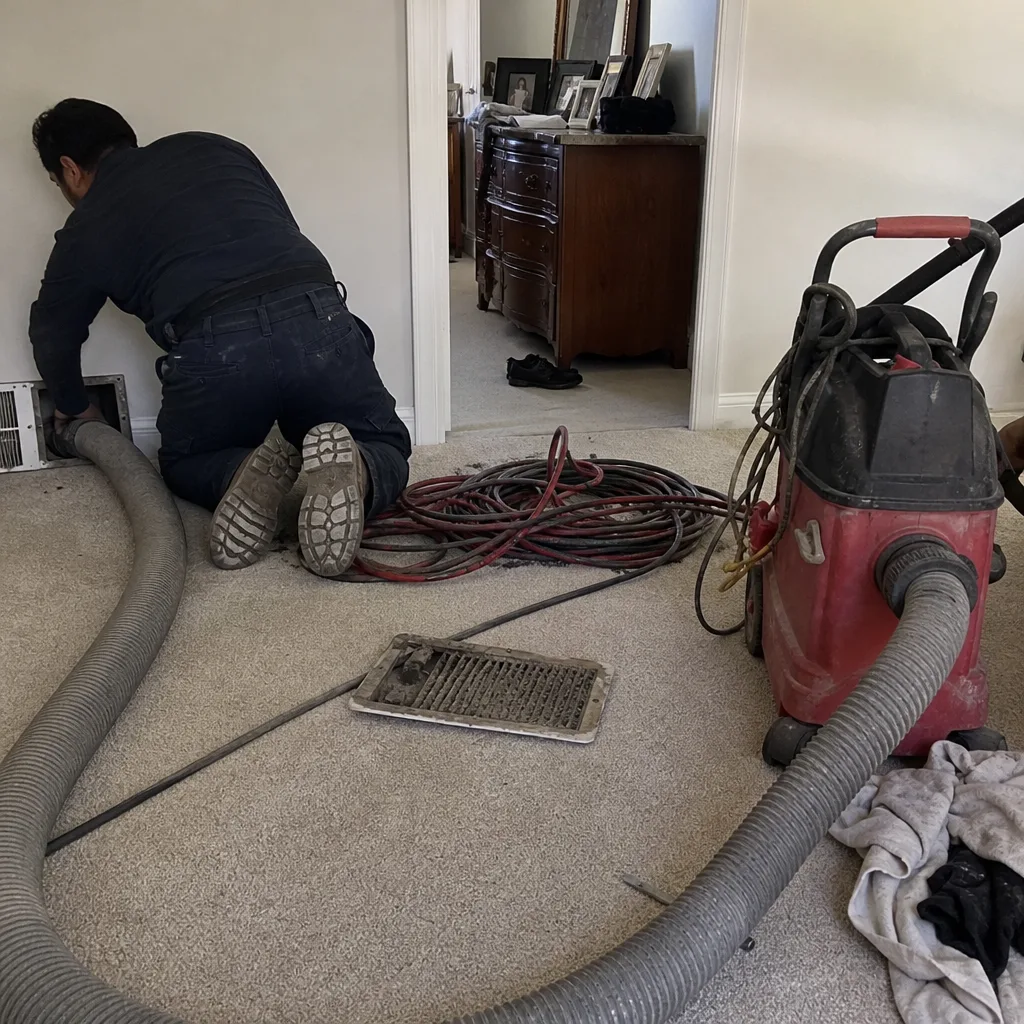
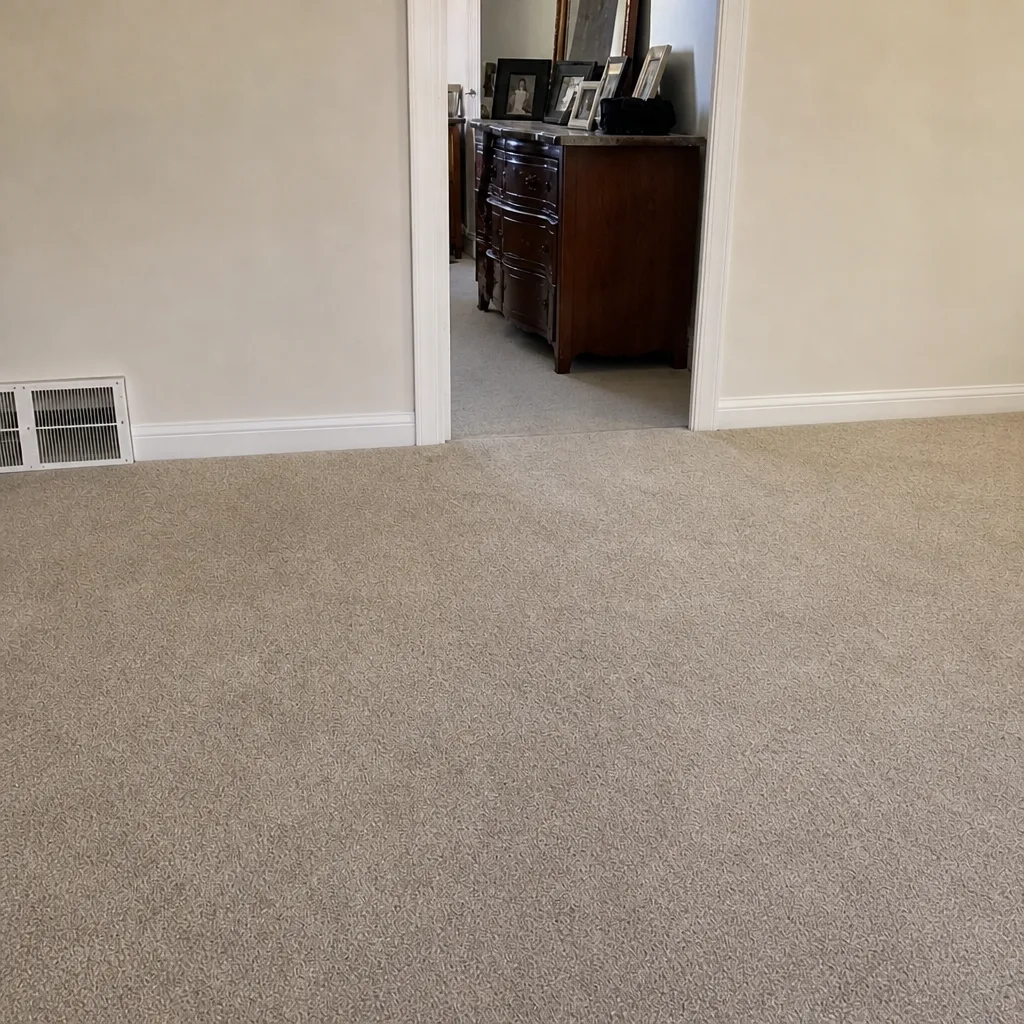
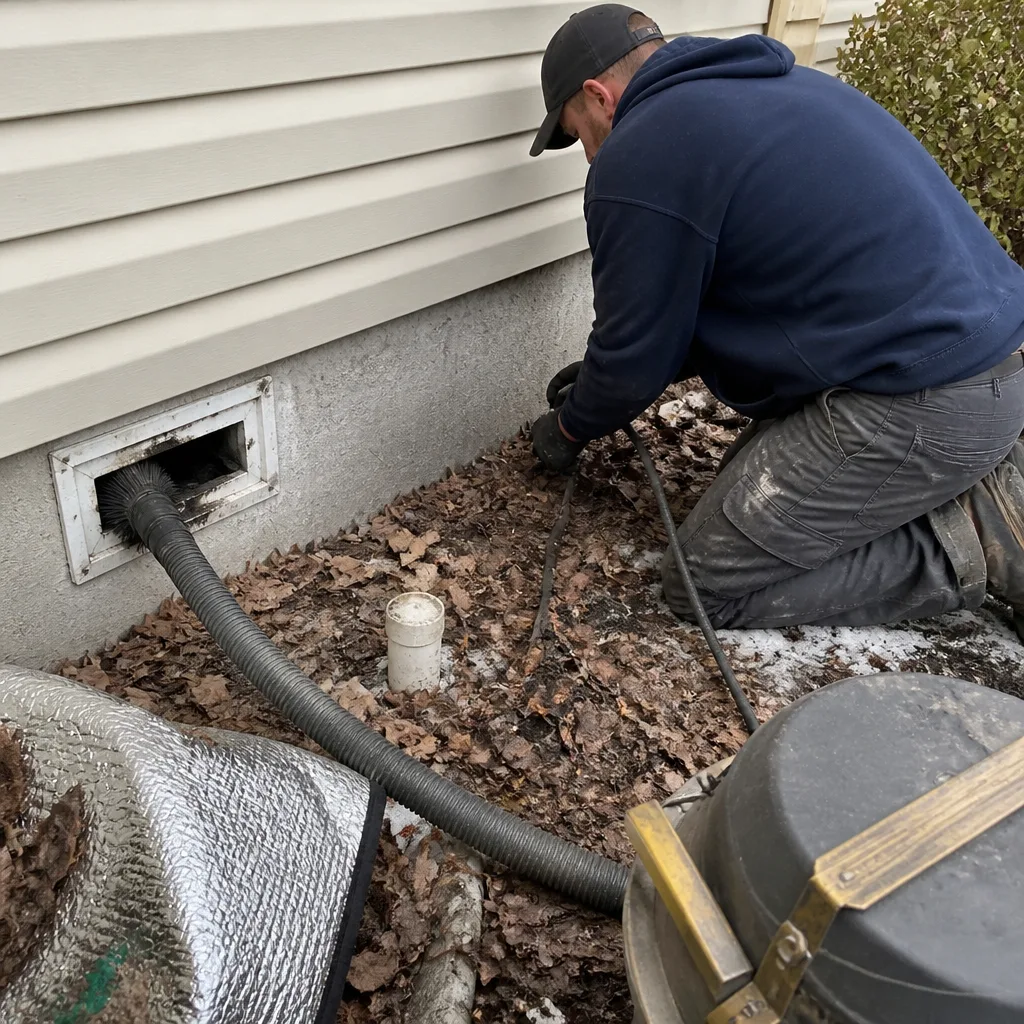
See the difference
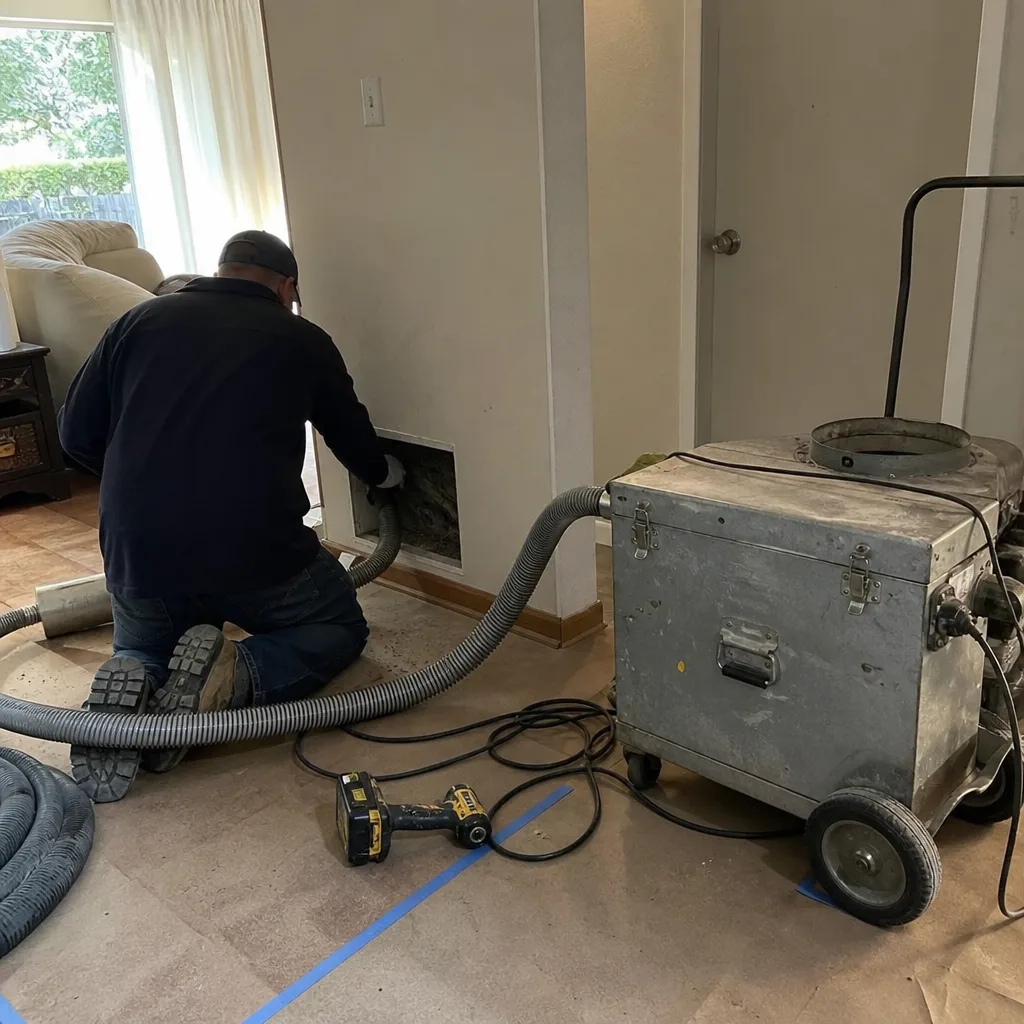 Before
 After
 Before
 After
 Before
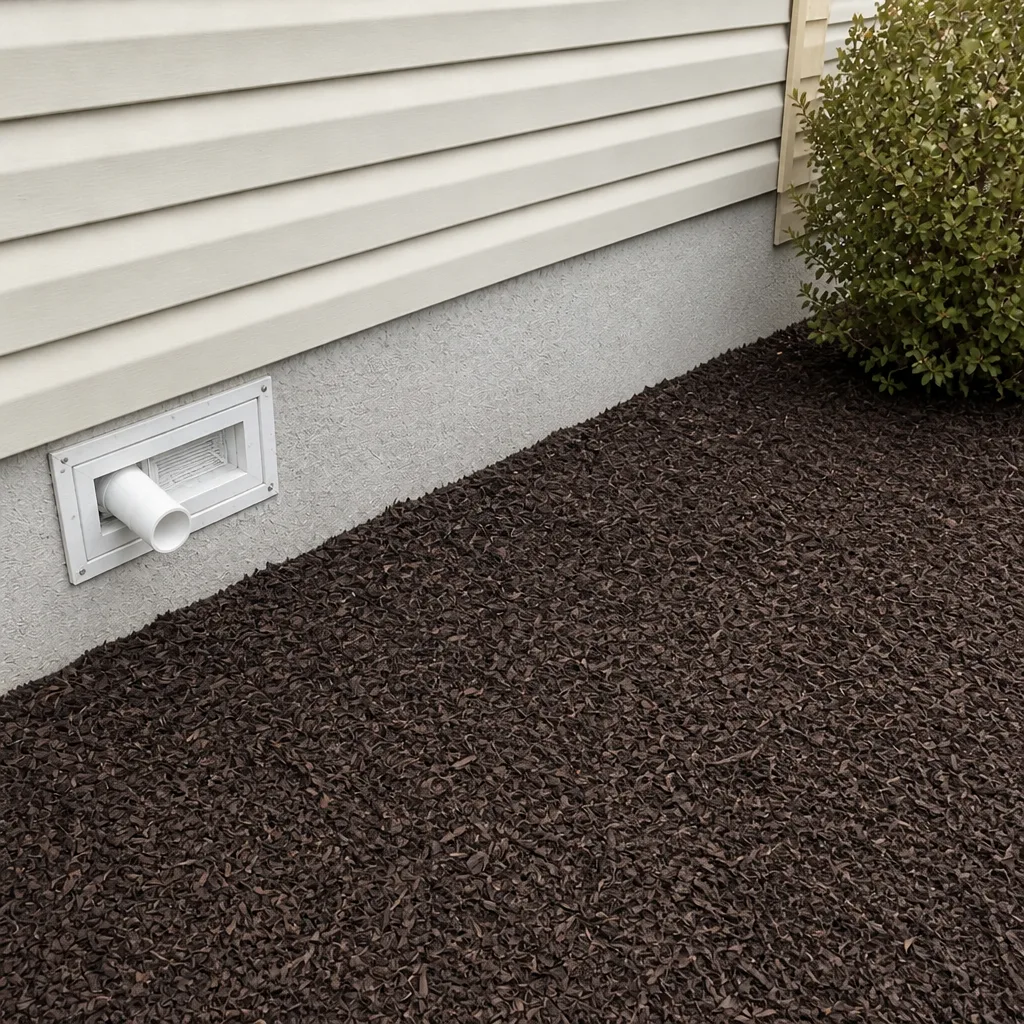 After
Dryer Vent Cleaning: Why Fall Belongs on the Calendar
Dryer vent cleaning gets grouped with duct cleaning because the equipment and the safety logic overlap, but the seasonal pattern is different. The heaviest dryer use in most Spokane homes is winter, when loads of heavy clothing, bedding, and towels cycle through back-to-back. Lint builds up in the vent run in direct proportion to that volume. Fall, before winter use ramps up, is the logical cleaning window.
The fire risk is real. Lint is highly combustible and accumulates in the vent run behind the dryer, in the flexible transition duct, and at the exterior termination. A restricted vent also drives the dryer to run longer, which produces more heat, which is the exact condition to avoid.
- Schedule dryer vent cleaning in late September or October so the vent is clear before the heavy-use months.
- Check the exterior termination each fall. Confirm the damper opens freely and no lint or debris has accumulated around it.
- Consider the vent run length. Long, convoluted runs (common in two-story homes with laundry moved from the original location) accumulate lint faster and are harder to clear with a consumer kit.
- Watch for warning signs during winter: loads that take longer to dry, clothes hotter than usual at the end of a cycle, or a dryer that overheats. These are vent restriction signals, not dryer failure signals.
- Pair dryer vent and duct cleaning on the same visit if possible. Both use the same professional equipment and the same technician visit. A single appointment keeps the fall schedule manageable.
The dryer vent is the part of home maintenance most likely to be skipped because nothing visibly goes wrong until it does. The routine cleaning is not a housekeeping chore. It’s the fire-prevention work that actually matters.
Cleaning vs. Repair: When the Ductwork Itself Is the Problem
Every professional cleaning turns up duct problems. Flex duct that has collapsed in an attic, seams that have separated at joints, return trunk lines that have come victim to pest activity or moisture, boots that aren’t properly connected to registers. Cleaning-only operators leave those problems in place and tell the homeowner their ducts are now clean. That’s not clean, that’s just cleaner around a broken system.
Signs the ductwork itself needs repair, not just cleaning:
- Uneven airflow between rooms. Some rooms get strong airflow, others get weak. Frequently a broken or disconnected flex run.
- Visible dust streaks at register edges or ceiling joints. Points to leakage at that connection.
- Higher energy bills without a clear explanation. Leaking ducts in an attic or crawlspace dump conditioned air into unused space.
- Pest or moisture evidence found during cleaning. Rodent entry points, condensation on cold duct surfaces, or mold on duct lining after a moisture event.
- Flex duct sagging or kinked in the attic. A common problem in Spokane homes built with attic runs, especially after years of high summer attic temperatures.
Air duct repair is a separate service from cleaning, and it takes a separate set of skills. We offer it as a distinct service because we see the same pattern often: a cleaning turns up broken ductwork, and the homeowner ends up calling a second contractor. Diagnosing and repairing the duct run on the same visit is the more sensible approach. It also means the cleaning actually holds, because clean ductwork that’s leaking at a seam isn’t going to stay clean for long.
Explore our air duct cleaning service to see how cleaning and inspection are handled on the same visit.
Common Mistakes to Avoid
- Cleaning once a year on an auto-renew subscription and calling it done. In Spokane’s climate, one cleaning a year misses either the spring pollen peak or the fall pre-heating window. Two cleanings, timed around the extremes, do the work one cannot. If you only do one, choose fall.
- Cleaning right after wildfire season ends, before the dust has settled. Fine smoke particulate takes time to settle on duct surfaces. Cleaning before it settles misses the worst of it. Wait a few weeks post-event, but don’t wait until the following spring.
- Assuming a filter change handles what a cleaning handles. Filters catch what’s in the airstream once the system is running. They don’t clear what’s already on the duct walls. Both matter, and neither is a substitute for the other.
- Skipping the dryer vent because the dryer is still working. Most dryer vent restrictions don’t cause the dryer to fail outright. They cause it to work harder, run hotter, and cycle longer. By the time the dryer fails or smells hot, the vent is usually seriously restricted.
- Choosing a company on price alone without asking about equipment. The difference between a Rotobrush or Nikro system and a shop-vac-style tool is the difference between actually clearing the duct and redistributing the dust. Ask what equipment is used before you book.
- Ignoring disconnected or damaged ductwork. A cleaning that leaves a broken flex run in place is money spent on the wrong problem. If the ductwork is damaged, cleaning without repair doesn’t solve the indoor air or energy-efficiency issue.
- Not asking for before-and-after photos. If the company can’t show you your own ducts before and after, ask why. It’s a small request that separates professional operators from the bargain tier.
When to Call a Professional
Some situations go past routine seasonal cleaning and call for a professional assessment on short notice. If any of these apply, it’s worth booking an inspection and estimate before the next scheduled maintenance window.
- A prolonged wildfire smoke event this past season, especially with the system running during the smoke.
- Visible dust settling on horizontal surfaces more than a day after a filter change.
- Uneven airflow between rooms, or rooms that never feel like they get enough air.
- Higher energy bills with no clear explanation, especially in heating season.
- A dryer that runs longer than usual or feels hot at the end of a cycle.
- Any sign of pest activity, moisture, or visible duct damage in the attic or crawlspace.
Duct Cleaning Spokane offers free estimates in Spokane. Call (866) 963-7098 to schedule an assessment. We answer 24/7, with fast dispatch from 7am to 7pm, Sunday through Friday.
Frequently Asked Questions
Twice a year is the seasonal guide for most Spokane homes: once in late spring after pollen season and once in early fall before the heating season starts. Homes that experienced a significant wildfire smoke event should add a third cleaning shortly after the smoke clears. Homes with pets, or with occupants who have respiratory sensitivities, may benefit from more frequent cleaning depending on how much accumulation we find on inspection. Call (866) 963-7098 for an exact quote. Estimates are free.
Before heating season is better. Late September to mid-October is the best window for most Spokane homes, because the heating season pushes the accumulated summer and fall particulate through the house as soon as the furnace runs continuously. Cleaning before that cycle starts means the heating system delivers clean air for the first time, rather than clearing out months of buildup through the airstream. Call (866) 963-7098 for an exact quote. Estimates are free.
Cost depends on the size of the system, the number of supply and return registers, the length of the duct runs, and whether any repair work is needed. We quote a flat price per system agreed before work starts, based on the actual layout, not a per-vent rate. The written estimate sets the final price. Call (866) 963-7098 for an exact quote. Estimates are free.
Cheap quotes usually cut one of three things: equipment, time, or scope. Consumer-grade vacuums and shop-vac-style tools can’t move enough air volume to clear a duct run, so they stir dust without removing it. Short appointments don’t give the technician time to reach every branch and trunk. And cleaning-only operators skip repair when the inspection reveals broken ductwork. Ask what equipment will be used and whether before-and-after photos of your ducts will be provided. Call (866) 963-7098 for an exact quote. Estimates are free.
Ask for before-and-after photos of your own ducts, not stock images. Any professional operator should be able to show you what the ductwork looked like before the cleaning and what it looked like after, and confirm the equipment used by brand. A company that can’t or won’t provide that is not the company to hire. Call (866) 963-7098 for an exact quote. Estimates are free.
Once a year is the baseline for most Spokane homes, and fall is the right time because dryer use climbs in winter. Homes with heavy laundry volume, long vent runs, or a history of slow drying should consider cleaning more often. If the dryer is running hot or taking longer than usual to dry, don’t wait for the annual appointment – get the vent checked. Call (866) 963-7098 for an exact quote. Estimates are free.
We use professional-grade Rotobrush and Nikro duct cleaning systems, with Abatement Technologies equipment available for elevated air quality and containment needs. This matters because the volume and pressure of air the equipment can move is what determines whether duct walls actually get cleared or just dusted. Consumer vacuums and shop-vac-style tools don’t come close to that capacity. We also work with Honeywell and Aprilaire air quality systems, which helps when a home has inline filtration that the cleaning needs to work around. You can see the full service at Duct Cleaning Spokane.
The Bottom Line
Spokane’s air quality swings hard between early summer’s clean air and late summer’s wildfire smoke, and the duct system absorbs every phase. One cleaning a year, whenever it happens to fall, misses half the cycle. Two cleanings, timed to late spring after pollen season and early fall before heating season, catch both stress peaks and reset the system at its cleanest moments. Add a post-wildfire cleaning when the summer warrants it, keep the filter strategy seasonal, and put dryer vent cleaning on the fall list before winter use ramps up. If the inspection turns up duct damage, repair it rather than just cleaning around it. Clean ducts, repaired ducts, done right.
Call (866) 963-7098 for a free estimate. We answer 24/7, with fast dispatch from 7am to 7pm, Sunday through Friday. Our technicians have up to 13 years of experience, and every visit includes before-and-after photos of your own ducts.
Written by the team at Duct Cleaning Spokane.