
Last updated November 14, 2026
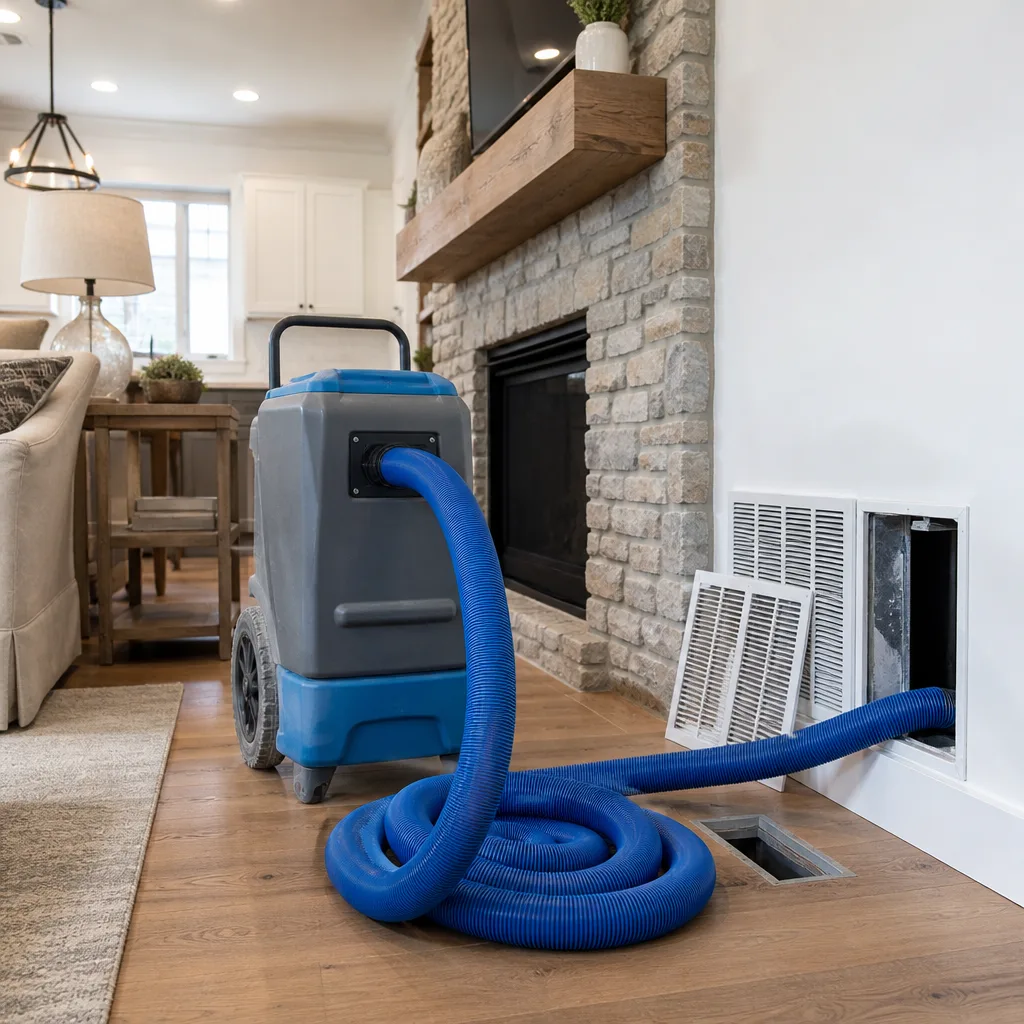 Whole-home duct cleaning
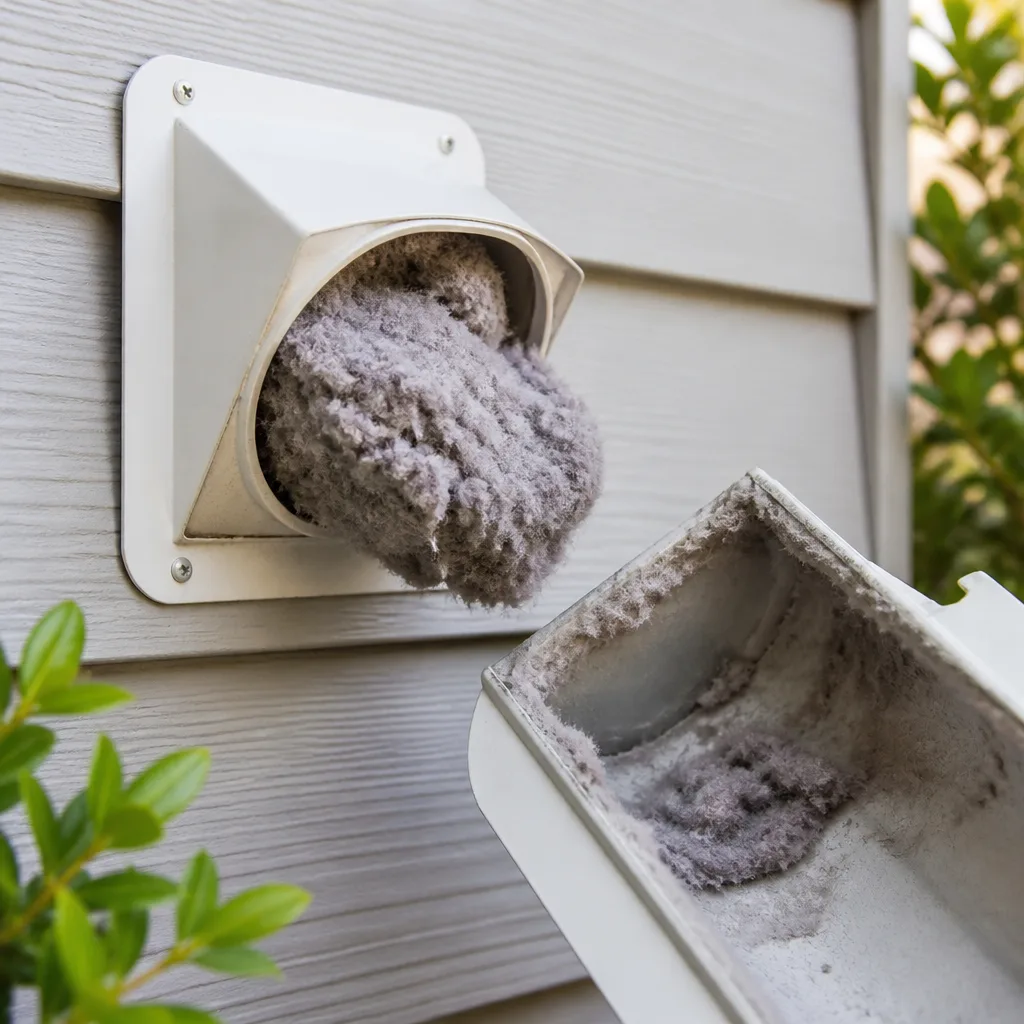 Dryer vent cleaning
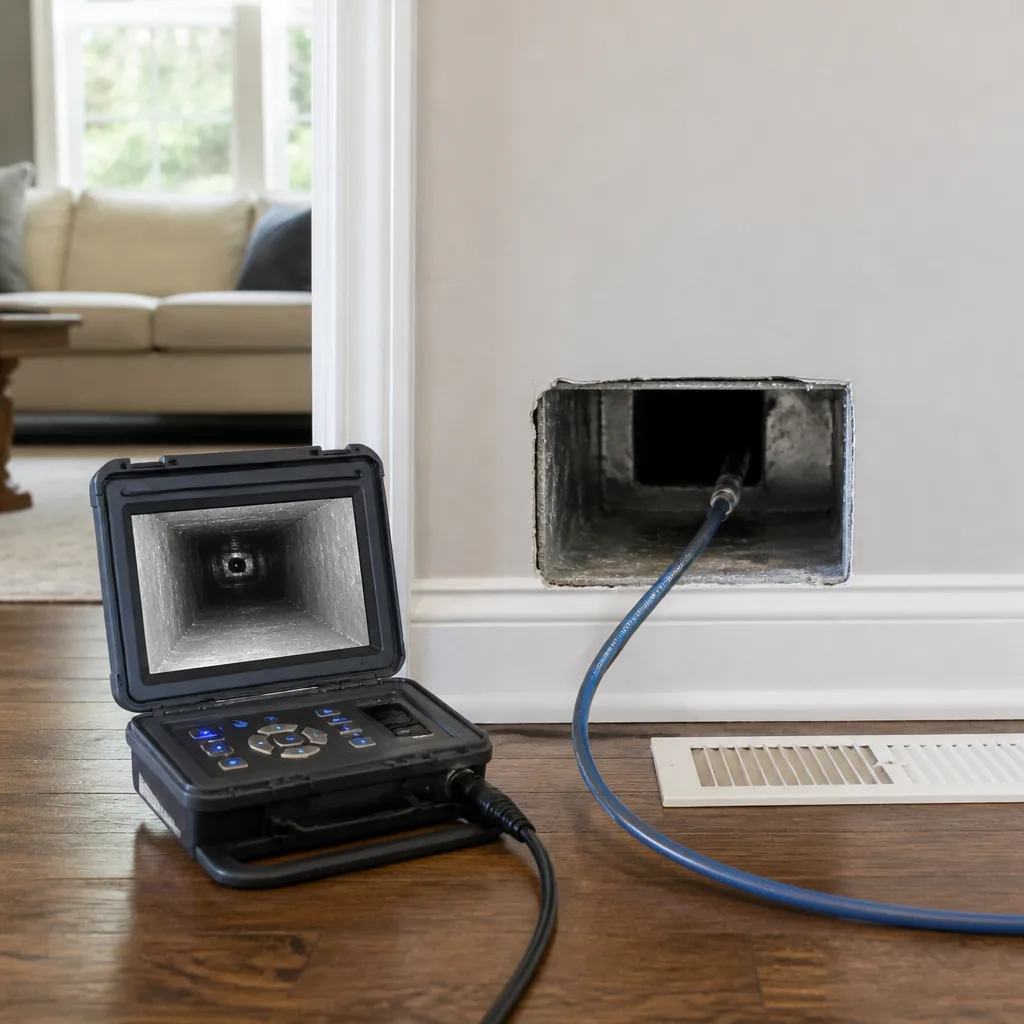 Camera inspection
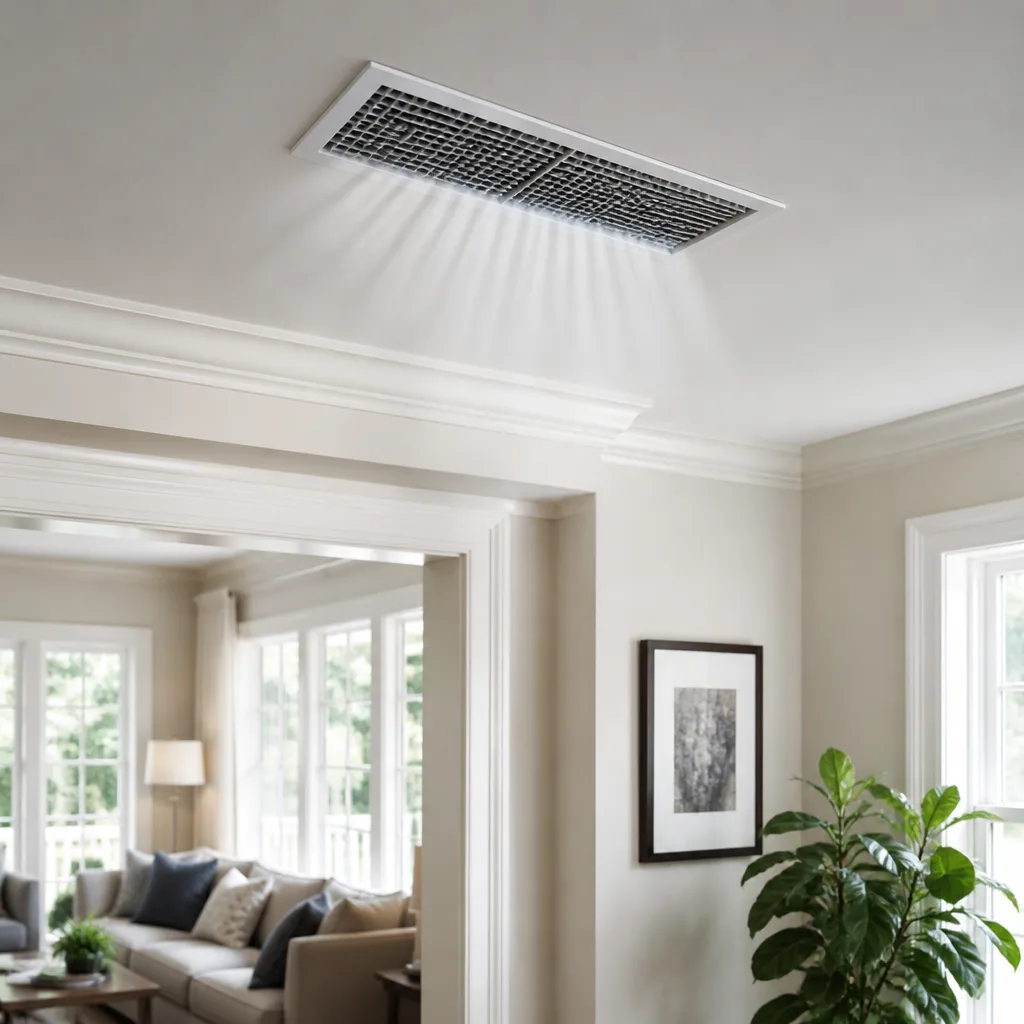 Sanitizing & deodorizing
Whole-system duct and dryer vent check with before-and-after photos - you see exactly what came out of your vents
That "$99 whole-house special" is a bait ad - the real number appears once they are in your hallway, or the "clean" is a shop-vac at the register. We photograph the inside of your ducts before and after instead.
Choosing the Right Air Duct Cleaning Brand: A Buyer’s Guide for Spokane
Here’s a detail most duct cleaning ads never mention: the equipment itself. Anyone can print business cards and rent a van. But the machines that actually remove debris from ductwork – not just blow it around – are a capital decision. A professional-grade duct cleaning system runs $15,000 to $60,000+ depending on configuration, and a contractor doesn’t spend that on a service they treat as a side offering. Equipment choice is the most honest signal you’ll get about how seriously a company takes this work, and in Spokane it’s a shortcut worth learning. This guide shows you exactly what to look for, what the brand names mean, and how to ask the right questions before anyone touches your ducts.
Quick Answer
The right duct cleaning brand in Spokane uses professional source-removal equipment (a negative-pressure vacuum, ideally truck-mounted) paired with proper agitation tools, not a shop vac and a drill brush. Look for recognizable professional equipment lines like Rotobrush, Nikro, or Abatement Technologies, ask directly what they run, and pay attention to whether the answer is specific. A company that can name its equipment and explain why it chose it is usually the one you want.
Styles & brands we work with
- Whole-home duct cleaning
- Dryer vent cleaning
- Camera inspection
- Sanitizing & deodorizing
Table of Contents
- The Two Equipment Categories That Define Professional Duct Cleaning
- Professional Equipment Brands to Recognize by Name
- Why Truck-Mounted Systems Beat Portable Units in Spokane
- HEPA Filtration on the Vacuum Exhaust: Why It Matters
- How to Ask a Contractor About Their Equipment
- Specialist vs. Generalist: What the Equipment Choice Reveals
- Why Cleaning and Repair Belong Together
- Dryer Vents: The Fire-Prevention Service Generalists Skip
The Two Equipment Categories That Define Professional Duct Cleaning
Professional duct cleaning isn’t one machine. It’s two tool categories working together, and a contractor who only brings one is doing half the job. Understanding what each category does makes the rest of this guide make sense.
Source Removal: The Negative-Pressure Vacuum
Source removal means pulling debris out of the system and capturing it – not dislodging it so it settles elsewhere in the house. The machine doing that is a high-powered vacuum that creates negative pressure inside the ductwork, so loosened material travels toward the vacuum rather than into your living room. Every credible duct cleaning system is built around this principle. When a company says they use a Rotobrush or Nikro or Abatement unit, what they mean is they’ve invested in a purpose-built source-removal machine, not a wet/dry vac.
Agitation Tools: Brushes vs. Air Whips
Debris sticks to duct walls. Dust, pet hair, construction dust, and lint cling to the interior surface, and a vacuum alone won’t break it loose. That’s what agitation tools are for, and there are two main styles:
- Contact brushing – a motorized rotary brush physically scrubs the duct interior. It’s effective on hard duct walls and stubborn buildup, and it’s what you’ll typically see on a Rotobrush system.
- Air whips – compressed-air lines that snap and flail inside the duct, knocking material loose with high-velocity air. Excellent for reaching into branches and corners a brush can’t comfortably navigate.
Serious contractors carry both, and in our experience the choice between them depends on the duct material and the condition they find. A company that only brushes misses the fine debris in corners. A company that only uses air whips may leave stuck-on buildup behind. Both, combined with source removal, is the professional standard – and it’s the standard we hold every job to at air duct cleaning.
Professional Equipment Brands to Recognize by Name
You don’t need to memorize spec sheets. You just need to recognize the names, because these are the brands you’ll find inside a contractor that has made a genuine investment in this trade. Here’s what each signals.
Rotobrush
Rotobrush is the most widely recognized name in residential duct cleaning, and its systems combine source-removal vacuum power with a rotary brush agitation tool. When you hear “Rotobrush,” you’re hearing about a machine built specifically for residential ductwork, not adapted from another trade. It’s the kind of equipment you’d expect from a dedicated specialist.
Nikro
Nikro manufactures professional vacuum systems and dust-collection equipment used across the cleaning industry. A contractor running Nikro equipment has chosen a commercial-grade vacuum platform – another sign they’ve built this service around real machinery.
Abatement Technologies
Abatement Technologies equipment is a step above routine residential cleaning. It signals capability for more demanding air quality scenarios – jobs that call for genuine containment and serious filtration. When a company has Abatement equipment on hand, it means they’ve prepared for situations beyond the standard cleaning, which is reassuring if your home has had renovations, water intrusion, or significant dust events.
Air Quality Systems: Honeywell and Aprilaire
Working with filtration and air quality systems from Honeywell and Aprilaire means the technicians understand how ductwork interacts with the rest of your home’s air management. A contractor who recognizes those systems knows how a whole-house filter or humidifier ties into the ducts – which matters when cleaning, because the equipment configuration affects how the job should be approached. It also reflects a broader familiarity with the home’s air envelope, not just the inside of a duct.
Why Truck-Mounted Systems Beat Portable Units in Spokane
Portable units have their place for tight access or apartment work. But for most single-family homes in Spokane, a truck-mounted system moves meaningfully more air, and that airflow is the entire point. Here’s the reasoning in plain terms.
The CFM Math
CFM stands for cubic feet per minute – the volume of air a vacuum can move. A truck-mounted vacuum typically pulls thousands of CFM, while a portable unit might move a few hundred. That gap matters because the goal at the main trunk of your duct system is to capture particulate faster than agitation can stir it up. Connect a big vacuum to the main plenum and the whole system goes under strong negative pressure; the trunk acts like a straw pulling loosened material toward the machine. A portable unit can create negative pressure too, but it’s weaker, so loosened material has more opportunity to drift back into a branch or settle before it reaches the capture point.
Why This Matters More in Spokane Homes
Many Spokane homes are single-story with long duct runs and a main trunk that serves a whole wing. That layout has more internal volume, and a system with more volume needs more airflow to pull effectively. Truck-mounted equipment handles that volume comfortably. Portable units can struggle on long runs, and a technician may need to reposition and repeat sections – which adds time and can leave some branches under-served. When you compare quotes, ask whether the equipment is truck-mounted or portable. If a quote comes in suspiciously low, that’s often one of the answers.
Spokane also sees its share of dry, dusty summers and cold winters with the heat running for months. That means lots of airborne dust working its way into return ducts, and a system that can pull strongly on the main trunk is what clears it.
HEPA Filtration on the Vacuum Exhaust: Why It Matters
Here’s the detail that separates a professional job from a “looks clean” job: what happens to the air the vacuum pushes out. A source-removal vacuum has to exhaust somewhere, and if the exhaust isn’t filtered, fine particulate – the kind you can’t see – can end up back in your home. HEPA filtration on the exhaust solves that by trapping sub-micron particles before they leave the machine.
Not every system includes HEPA as standard, so this is worth asking about directly. HEPA filtration matters in a residential context because:
- It protects the occupants – you’re not trading duct debris for airborne dust.
- It protects the process – contaminated exhaust undermines the point of cleaning in the first place.
- It’s a visible quality signal – a company that thinks about exhaust filtration thinks like a professional, not a hobbyist.
When you ask about equipment, add HEPA to the question. A specialist will know the answer immediately. A generalist may not know what you mean. From our side, we use professional-grade equipment lines because the exhaust filtration built into them is part of why the work is done right. Clean ducts and clean air should be the same outcome.
How to Ask a Contractor About Their Equipment
This is where most homeowners get stuck, because they don’t know what to ask. The good news is that the question is simple, and the answer is revealing. Here’s a step-by-step approach.
1. Ask what equipment they’ll use – and let them answer
Say: “What equipment do you run for the cleaning?” Then listen. Wait for a name. A confident contractor will say something like “Rotobrush” or “Abatement” or “Nikro,” and may add whether it’s truck-mounted or portable. That’s the specific answer.
2. Listen for a vague deflection
If the answer is “professional equipment” or “the best equipment on the market” with no name attached, that’s a flag. Ask again: “Which brand?” A real specialist isn’t shy about naming it – the equipment is a point of professional pride. A company that changes the subject usually has a reason.
3. Ask whether it’s truck-mounted or portable
The answer tells you about CFM and capability. Truck-mounted is the stronger choice for most single-family homes, and it’s what you’d expect from a company doing this as their main work.
4. Ask about HEPA on the exhaust
This separates the professionals from the pretenders. If they know the term and confirm it, good. If they ask what you mean, that’s information too.
5. Ask what happens if they find damaged ductwork
Cleaning can reveal gaps, disconnected joints, or crushed runs. A specialist should have an answer that involves repairing what they find, not just cleaning around it. Our three-service focus is air duct cleaning, dryer vent cleaning, and air duct repair – so a repair finding doesn’t mean a second contractor.
Interpreting the answers isn’t complicated. Specific and technical equals credible. Vague and evasive equals a problem. The whole conversation takes two minutes.
Specialist vs. Generalist: What the Equipment Choice Reveals
A generalist HVAC company treats duct cleaning as an add-on. Their trucks are built around furnace work, and duct cleaning is a line item they offer because customers ask. That’s not a knock on their HVAC skills – it’s an honest read of how capital gets allocated. If duct cleaning is 5% of your revenue, you don’t buy a $40,000 duct cleaning system.
A specialist does the opposite. They invest in dedicated equipment because duct cleaning and dryer vent work is the entire trade. That focus shows up in a few places:
- Equipment specificity – they can name their machines and explain their choices.
- Process depth – they know the difference between contact brushing and air whips and can say which they’ll use and why.
- Repair capability – cleaning reveals problems, and specialists fix them rather than subcontracting.
- Dryer vent expertise – a critical fire-prevention service many generalists skip or underperform.
For homeowners and property managers in Spokane, the practical takeaway is that a focused specialist removes a layer of uncertainty. The person at your door has done this work recently and often – not once in between furnace tune-ups. If you’re sorting through quotes, the Duct Cleaning Spokane approach is a useful reference point: three services, done as core work, with equipment that makes the process verifiable.
Why Cleaning and Repair Belong Together
Cleaning exposes things. Once a duct run is opened up and inspected, technicians find disconnected joints in the attic or crawlspace, crushed flex duct behind a knee wall, gaps where a run meets the plenum, or ductwork that was re-routed poorly in a past renovation. In a city with as much older housing stock as Spokane, that last one comes up more than you’d think.
Here’s the problem with a cleaning-only company: they find the leak, clean around it, and leave. The cleaning was fine, but the ductwork is still compromised, and the air you paid to clean has an escape route. That’s why air duct repair is a distinct service in its own right, and why we offer it alongside cleaning. When cleaning reveals damaged ductwork, the job doesn’t end with a recommendation to call someone else.
What repair typically involves depends on what’s found:
- Seal or reconnect disconnected joints and gaps in accessible ductwork.
- Replace crushed or damaged flex runs that have lost airflow.
- Re-shape or re-support duct that’s sagging or been compressed in tight spaces.
- Re-verify airflow at the registers after repair so the fix is real, not assumed.
If a contractor’s answer to “what do you do if you find damaged ducts?” is a shrug, that tells you cleaning is the whole business – and repairs aren’t. In our view, the two belong on the same ticket.
Dryer Vents: The Fire-Prevention Service Generalists Skip
Dryer vent cleaning is a fire-prevention service, not a housekeeping chore. Lint accumulates in the vent run and around the transition duct behind the dryer, and it’s highly combustible. A clogged vent also strains the dryer, makes clothes take longer to dry, and drives up energy use. This is one of the few home services where the risk is genuinely about safety, not aesthetics.
It’s also one that generalists often skip or underperform, because it requires its own equipment and doesn’t fit neatly into HVAC work. A dedicated dryer vent service uses proper vent brushes and vacuums sized for the run, handles the transition duct and exterior termination, and checks for the kind of blockage a homeowner can’t see from either end. If you’re hiring a duct specialist for the main ductwork, ask whether dryer vent cleaning is part of their regular work. If it isn’t, that’s another signal you’re talking to a generalist.
The way we frame it: cleaning dryer vents is a small job that prevents a serious outcome. It’s better to schedule it than to wonder about it. And because our whole focus is air duct and dryer vent work, it’s a service we treat with the same standard as the main duct cleaning – professional equipment, one flat price per system agreed before work starts, and before-and-after photos of what we found.
Common Mistakes to Avoid
- Hiring on price alone. The cheapest quote is often the one using the smallest portable unit and no HEPA filtration. An honest whole-system range is a better comparison than a teaser number.
- Accepting “professional equipment” as an answer. Ask for the brand. A specialist names their equipment – Rotobrush, Nikro, Abatement – without hesitation.
- Assuming a famous HVAC name means duct expertise. A well-known furnace company may still be using entry-level equipment for duct cleaning. Equipment is the tell, not the logo on the truck.
- Skipping the dryer vent because it isn’t “the ducts.” Many Spokane homeowners call for air duct cleaning and never think about the dryer vent. It’s often the higher-risk service, and it should be part of the conversation.
- Not asking about repair. If the company only cleans, you’ll need someone else when they discover a crushed run. Ask up front whether repair is in scope.
- Settling for a quote with no scope. A per-vent price tells you nothing about what’s included. Ask for one flat price per system, in writing, with before-and-after photos of your own ducts as part of the job.
- Putting it off until the ducts are visibly bad. Duct cleaning is scheduled maintenance. Waiting for an obvious problem usually means there’s a bigger problem to solve.
See the difference
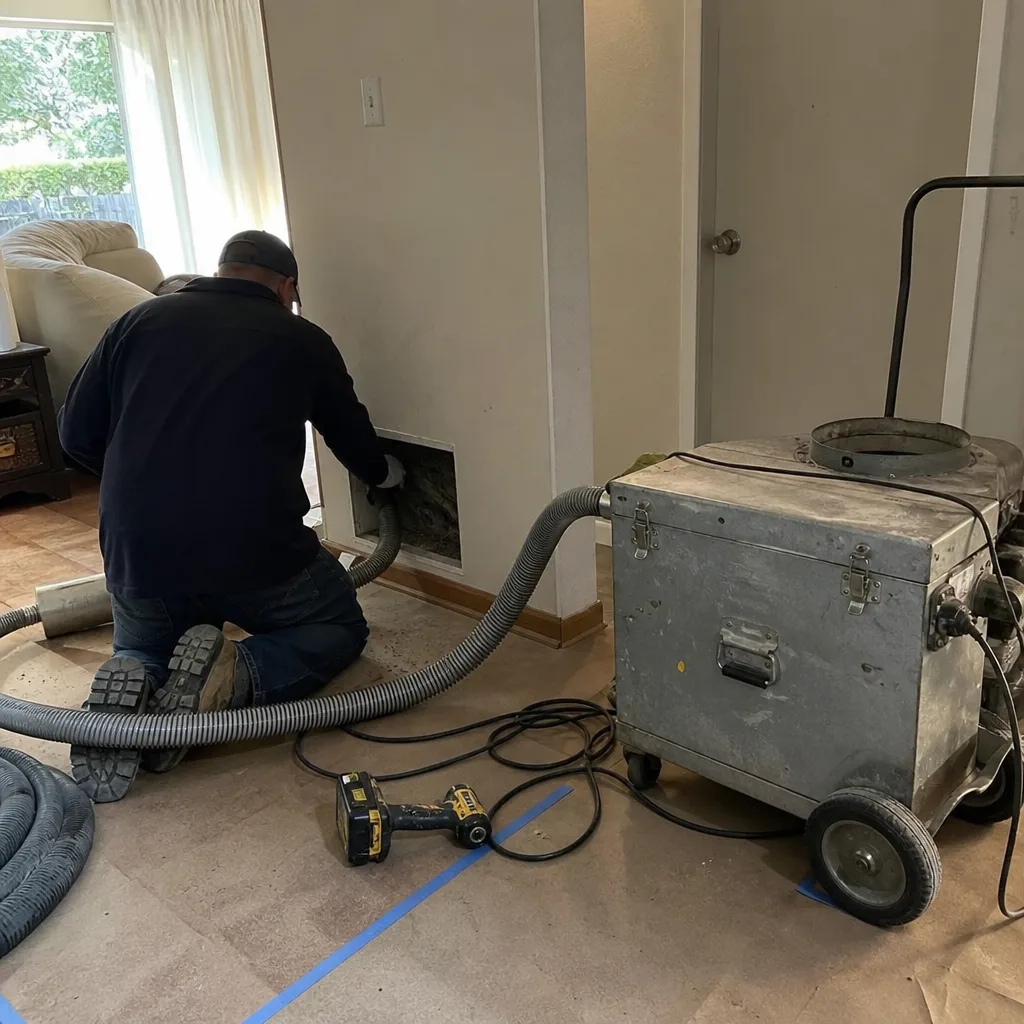 Before
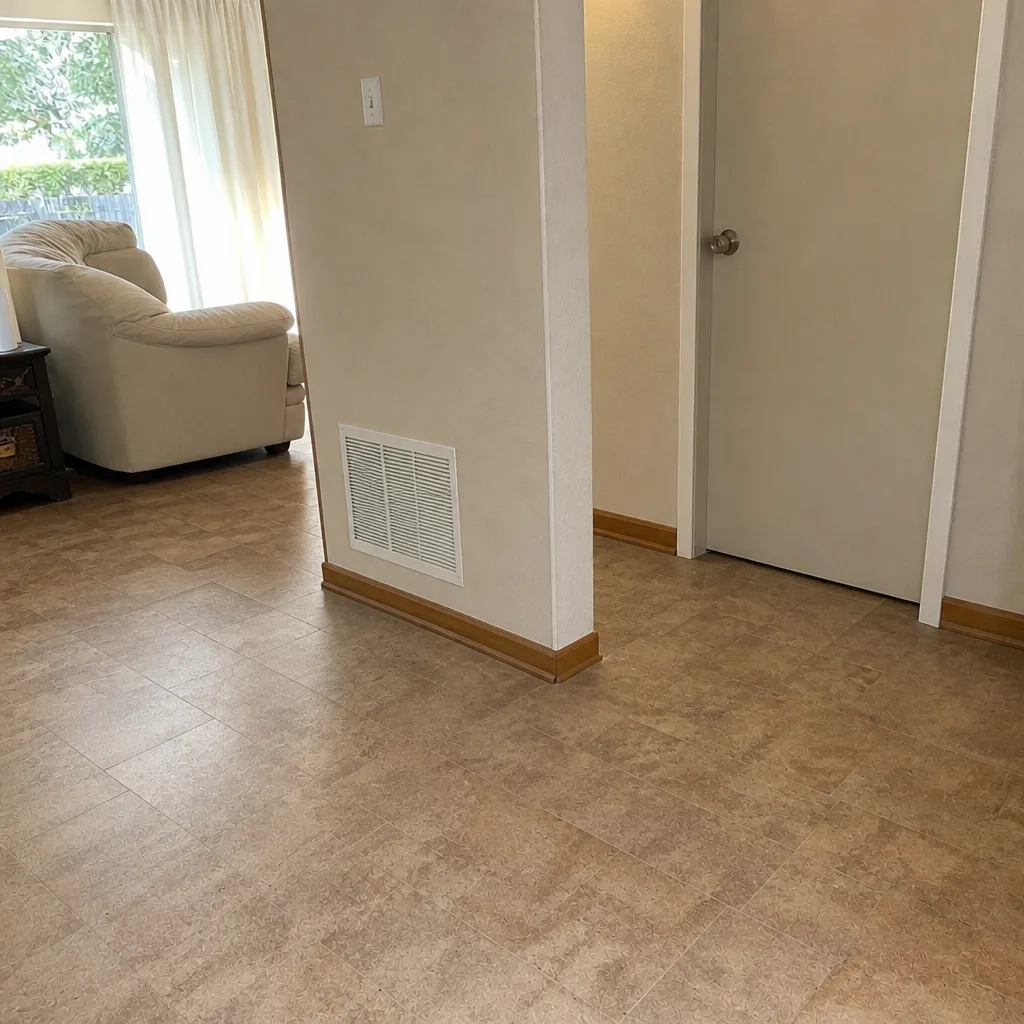 After
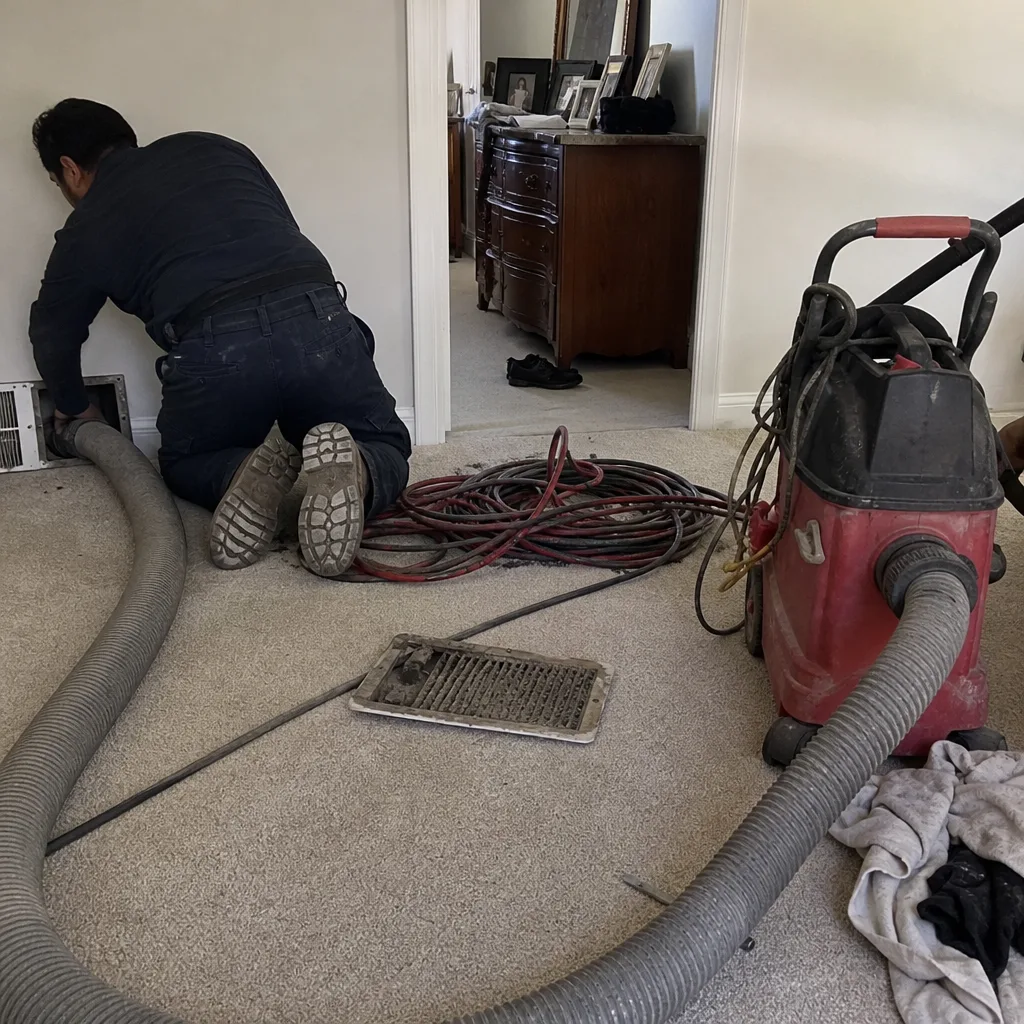 Before
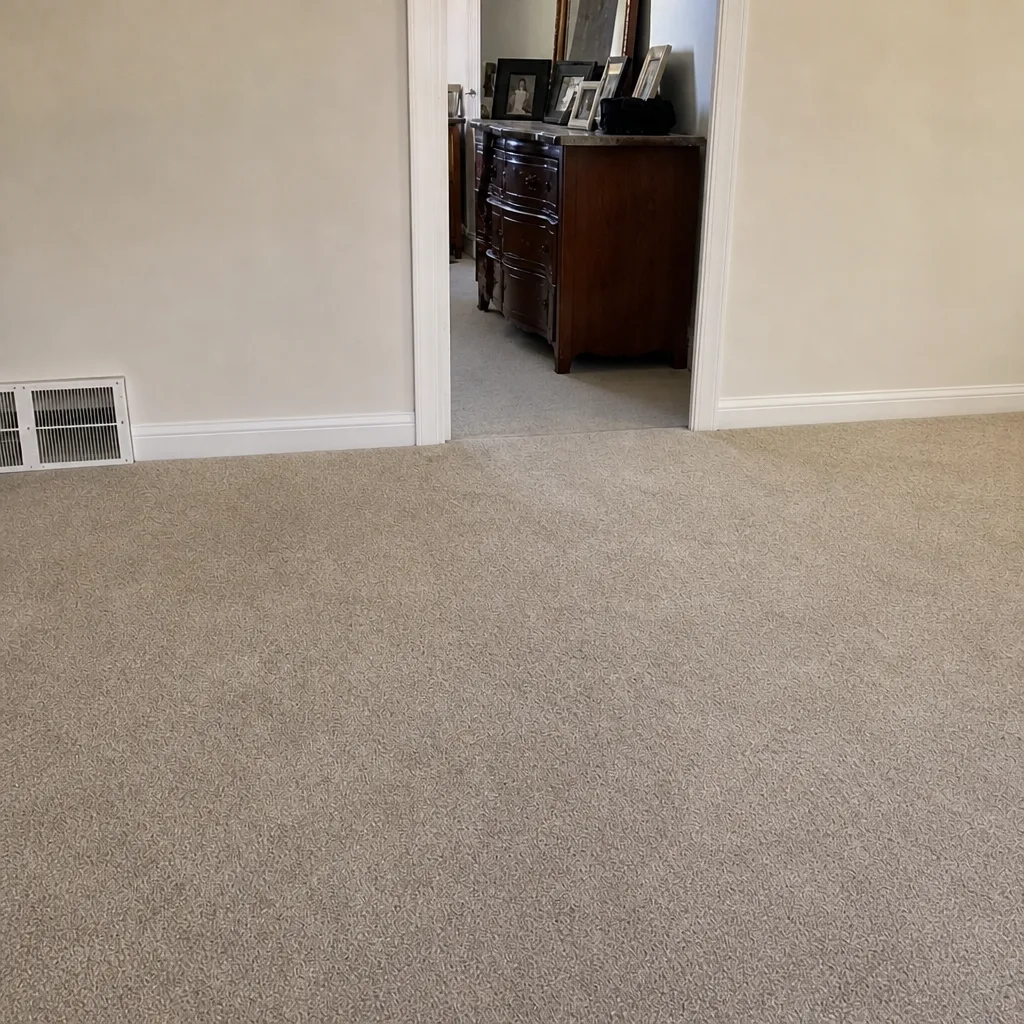 After
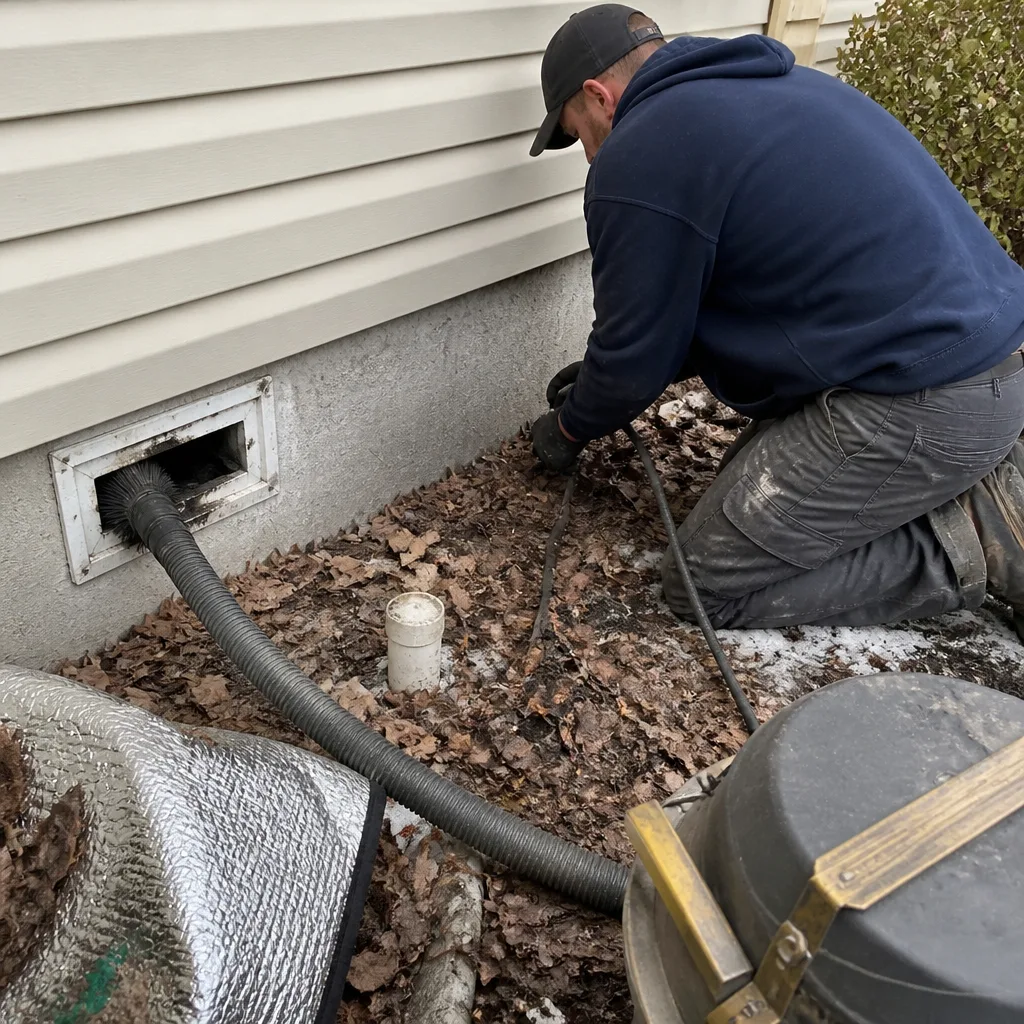 Before
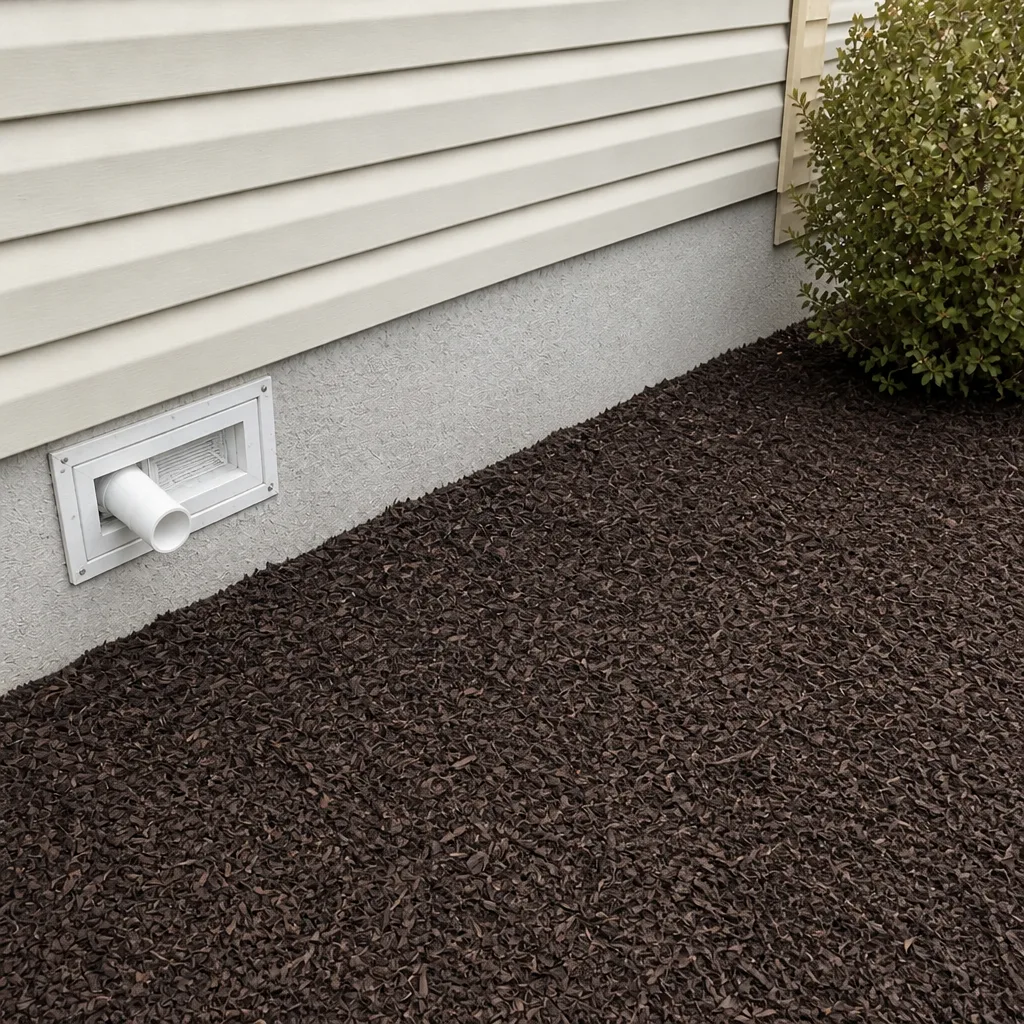 After
When to Call a Professional
Some situations call for a professional duct evaluation sooner rather than later. If you’ve just finished a renovation and drywall dust is everywhere, if you’ve noticed more dust settling on surfaces than usual, or if airflow at some registers feels weaker than others, it’s worth having the ductwork assessed. A recent move into an older Spokane home is another good reason, since past modifications are often not documented. If your dryer is taking longer than it used to, the vent should be checked. And if you’re a property manager responsible for multiple units, scheduling a routine assessment is a more reliable approach than reacting to a tenant complaint.
Duct Cleaning Spokane offers free estimates in Spokane – call (866) 963-7098. We answer 24/7. Fast dispatch from 7am to 7pm, Sunday through Friday.
Frequently Asked Questions
The brands most often cited by certified duct cleaning specialists are Rotobrush, Nikro, and Abatement Technologies. Rotobrush is built specifically for residential ductwork, Nikro makes commercial-grade vacuum and dust-collection systems, and Abatement Technologies signals capability for more demanding air quality scenarios. Honeywell and Aprilaire aren’t duct cleaning equipment, but contractors familiar with those air quality systems understand how filtration and the ducts interact. The brand is less important than the fact that a specific professional brand is named – that’s the signal. Call (866) 963-7098 for a free estimate.
For most single-family homes in Spokane, yes – a truck-mounted system moves significantly more cubic feet per minute than a portable unit, which means stronger negative pressure at the main trunk and better capture of loosened debris. Portable units are useful for tight access or apartment work, but on a single-story home with long duct runs, truck-mounted equipment handles the volume more effectively. Ask which type a contractor plans to bring; the answer tells you a lot about the job they intend to do.
We don’t quote per-vent prices or teaser coupons – whole-system pricing depends on the size and configuration of your ductwork, how many systems the home has, and what condition the runs are in. The honest way to compare is to get a written, flat, per-system quote and confirm what it includes. Be cautious of a number that’s far below the others; it often means smaller equipment, no HEPA filtration, or an upcharge once the technician is on site. Call (866) 963-7098 for a free estimate.
Cheaper quotes usually track to smaller equipment, missing HEPA filtration, no repair capability, and sometimes a price that grows once work starts. A contractor who has invested in professional-grade machinery has real costs behind the number, and a quote that ignores those costs has to make up the difference somewhere. Ask what equipment will be used, whether the vacuum exhaust is HEPA-filtered, and whether repair is in scope if damage is found. The answers usually explain the price gap.
Ask for before-and-after photos of your own ducts as part of the job, and confirm they’ll be provided. A professional job is verifiable – you should see what was there before and what it looks like after. That standard exists precisely because vague assurances were the industry’s reputation problem for years. We build photo documentation into every job for that reason. Call (866) 963-7098 for a free estimate.
There’s no single schedule that fits every home, but a common guideline is every few years for a typical household, sooner after a renovation, a move into an older home, or if you’ve noticed excessive dust indoors. Homes with pets or a lot of foot traffic may warrant more frequent attention. The honest answer depends on the condition of your system, which is why an inspection beats a rigid timetable. Call (866) 963-7098 to talk it through.
The Bottom Line
The brand on the equipment is a strong proxy for the contractor’s commitment. A company that runs Rotobrush, Nikro, or Abatement Technologies has spent $15,000 to $60,000+ on purpose-built machines, paired source removal with agitation tools, and treats HEPA filtration as part of the process. A company using unknown gear often treats duct cleaning as a side job. Ask the equipment question, listen for specifics, and compare written flat-price quotes. That’s the shortcut. Clean ducts. Repaired ducts. Done right. If you’re in Spokane and want a free estimate, call (866) 963-7098. We answer 24/7. Fast dispatch from 7am to 7pm, Sunday through Friday.
Written by the team at Duct Cleaning Spokane.